
Cross-border trade between the UAE and Saudi Arabia has never been busier. Factories are shipping more, retailers are restocking faster, and e-commerce platforms are pushing fulfilment timelines to the limit. All of that commercial activity needs a logistics backbone — and for most businesses operating between these two markets, road cargo from Dubai to Saudi Arabia has become the default answer.
The reasons are straightforward. Air freight moves cargo quickly, but the costs are punishing at scale. Sea freight is economical, but the timelines often don’t work for businesses with fast-moving inventory. Dubai to Saudi Arabia road transportation sits in a practical middle ground — fast enough, affordable enough, and flexible enough to handle everything from palletised retail stock to heavy industrial equipment.
For companies that need to move goods regularly across this corridor, Dubai to saudi by road cargo isn’t just a convenient option. It’s often the only one that makes commercial sense. Our dedicated road freight services are built specifically around the demands of this high-volume trade route.
Delivery Timelines That Actually Work for Business
Ask any logistics manager what matters most, and delivery speed will be near the top of every list. Land freight from Dubai to Saudi Arabia — covering major cities like Riyadh, Dammam, and Jeddah — typically completes in a few days. That’s not a marketing claim; it reflects the reality of the highway infrastructure and border systems now in place across the GCC.
Sea freight simply can’t compete on that timeline. Air cargo can, but at a price that makes it impractical for anything beyond urgent, high-value shipments. Road trucking fills the gap — faster than ocean shipping, substantially cheaper than flying cargo.
That balance makes GCC road freight services the natural fit for FMCG products, retail inventory, electronics, eCommerce parcels, and general commercial cargo where speed matters but unit economics still have to work. The same logic applies beyond Saudi Arabia — businesses relying on Dubai to Bahrain road transport benefit from the same cost and speed advantages across the wider GCC corridor.
The Trucking Cost Argument Is Straightforward
Moving goods by road between the UAE and Saudi Arabia costs significantly less than air freight — particularly for medium to large shipment volumes. For businesses running regular cross-border trucking operations, that difference compounds quickly over a year of shipping cycles.
What makes road freight commercially attractive isn’t just the base rate, though. It’s the range of options available through our UAE to Saudi FTL services:
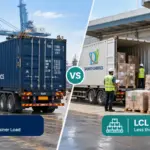
- Full Truckload (FTL) suits dedicated, high-volume runs where a shipper needs the full trucking capacity for their cargo.
- Less-than-Truckload (LTL) allows smaller businesses to share truck space and pay only for what they use.
- Temperature-controlled trucking handles perishables, pharmaceuticals, and other sensitive cargo categories.
- Specialist vehicle options cover oversized loads, hazardous materials, and non-standard freight.
Businesses aren’t forced into a fixed model. They can structure their logistics around actual shipment requirements rather than paying for trucking capacity they don’t need.
Fewer Handoffs, Less That Can Go Wrong
Port transfers, airport handling, intermediary storage — each touchpoint in a multi-modal journey is an opportunity for delays, damage, or paperwork problems. Road freight cuts through that complexity.
A truck loads at a warehouse, distribution centre, or fulfilment hub in Dubai and delivers directly to the destination in Saudi Arabia. One trucking vehicle, one journey, one set of documentation. That simplicity isn’t just operationally convenient — it translates directly into lower rates of cargo damage, fewer delays caused by missed connections, and less administrative burden on logistics teams.
For businesses managing tight inventory cycles or time-sensitive deliveries — whether it’s cargo from Dubai to Riyadh by road, cargo to Jeddah, or cargo to Dammam — that reduction in complexity has real value.
The Infrastructure Has Caught Up With the Demand
A decade ago, the border crossing experience between the UAE and Saudi Arabia was a source of genuine frustration for freight operators. That’s changed substantially. Both governments have invested heavily in the road networks and border facilities that commercial trucking depends on.
The Al Ghuwaifat and Al Batha crossings have been upgraded with digital customs systems, more efficient inspection procedures, and streamlined clearance processes. Modern freight corridors now connect Dubai to the major Saudi commercial centres with the kind of reliability that businesses need to plan around.
The practical effect is predictable transit times and fewer surprise delays — which, for supply chain planning, is worth a great deal.
Road Freight Handles Whatever Businesses Need to Move
One reason road cargo from Dubai to Saudi Arabia continues to grow on this corridor is its genuine versatility. The cargo categories moving between the two markets span a wide range — construction materials, retail products, industrial machinery, automotive parts, electronics, perishables, medical supplies, and eCommerce packages. Road trucking handles all of it.
The choice of vehicle and service type reflects that range. Dedicated trucks for full loads, shared capacity for smaller shipments, refrigerated trucking units for temperature-sensitive cargo, specialist transport for anything that doesn’t fit the standard configuration. Businesses across different sectors can find a configuration that matches their requirements without compromising on service.
Visibility Has Become a Standard, Not a Premium
Tracking a shipment used to mean a phone call and a vague estimate. That’s not how reputable GCC road freight services work anymore. GPS monitoring and real-time logistics systems are now built into standard service offerings on the Dubai–Saudi Arabia route.
Businesses can track where their cargo is, monitor delivery progress, receive updated arrival estimates, and flag any changes in status — all without chasing down a dispatcher. For companies managing large inventory movements or coordinating with customers on delivery windows, that level of visibility changes how operations run. Planning becomes more precise. Customer communication becomes more reliable. Exception management becomes faster.
Ecommerce Has Changed the Urgency
The growth of online retail across the UAE and Saudi Arabia has created a specific kind of logistics pressure that road freight is well-suited to handle. eCommerce businesses need inventory replenished quickly, fulfilment cycles kept short, and delivery commitments met consistently. A supply chain that regularly underperforms on any of those fronts creates customer service problems that compound quickly.
Road trucking between Dubai-based warehouses and Saudi customers supports the movement rhythm that online retail requires. As cross-border eCommerce volumes continue to grow, the demand for reliable, fast dubai to saudi by road cargo services on this corridor will grow with them.
Why land freight from Dubai to Saudi Arabia keeps growing
Trade between the UAE and Saudi Arabia is expanding across virtually every sector — retail, manufacturing, construction, technology, and healthcare. More trade means more goods moving, more frequently, under more competitive timelines. The logistics requirements don’t get simpler as volumes grow.
Road freight addresses the practical realities of that environment: competitive trucking costs, reliable delivery windows, genuine cargo flexibility, and the infrastructure to support consistent cross-border operations. For most businesses in this market, those aren’t nice-to-have qualities — they’re baseline requirements. Explore our full range of cross-border logistics solutions to find the right fit for your supply chain.
Closing Perspective
The logistics corridor between Dubai and Saudi Arabia has matured into one of the most commercially significant freight routes in the region. Dubai to Saudi Arabia road transportation now underpins supply chains across dozens of industries, handling everything from fast-moving consumer goods to heavy industrial freight.
Strong highway infrastructure, modernised border crossings, direct door-to-door trucking capability, and scalable service options have collectively made road freight the practical first choice for businesses that need cross-border logistics to actually work. As regional trade volumes continue to climb, that position is unlikely to change — if anything, land freight from Dubai to Saudi Arabia will only become more central to how commerce moves across the GCC.