
Choosing the right shipping method is one of the most important decisions when importing or exporting goods. Whether you’re sourcing products from overseas or managing regular international shipments, the way your cargo is transported can affect costs, transit times, inventory planning, and overall supply chain efficiency.
For businesses importing from countries such as China, two of the most common sea freight options are Full Container Load (FCL) and Less than Container Load (LCL) shipping. While both move cargo by sea, they serve different business needs depending on shipment volume, urgency, and budget.
If you’re looking for a reliable cargo service in Dubai or planning China to Dubai cargo door to door shipments, understanding the difference between FCL and LCL can help you make a more informed decision.
In this guide, we’ll explain how each shipping method works, compare their advantages, and help you determine which option best suits your business.
Understanding FCL and LCL Shipping
Although both methods use shipping containers, the main difference lies in how the container space is used.
What Is FCL Shipping?
Full Container Load (FCL) means your cargo occupies an entire shipping container. Even if the container isn’t completely full, it is reserved exclusively for your shipment.
Since your goods remain in the same container from origin to destination, they are handled less frequently during transit. This reduces the risk of damage and often allows for faster processing at ports.
FCL is commonly used by businesses that:
- Import large quantities of products
- Ship goods regularly
- Need greater cargo security
- Want faster container handling
- Prefer dedicated container space
For manufacturers, wholesalers, and high-volume retailers, FCL is often the most efficient solution for international shipping.
What Is LCL Shipping?
Less than Container Load (LCL) is designed for businesses that don’t have enough cargo to fill an entire container.
Instead of paying for a full container, multiple shipments from different businesses are consolidated into one container. Each shipper only pays for the space their cargo occupies.
This makes LCL an excellent option for:
- Small businesses
- Start-ups
- Low-volume imports
- Sample shipments
- Businesses placing smaller, frequent orders
LCL allows companies to import products without waiting until they have enough cargo to fill a complete container.
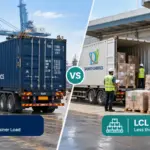
FCL vs LCL: What’s the Difference?
While both shipping methods move goods internationally, they differ in several important ways.
Feature | FCL Shipping | LCL Shipping |
Container | Exclusive use | Shared with other shipments |
Shipment Size | Large volumes | Smaller volumes |
Cost Structure | Pay for entire container | Pay only for the space used |
Cargo Handling | Minimal handling | More handling during consolidation |
Transit Time | Generally faster | May take longer due to consolidation |
Best For | High-volume shipments | Smaller or occasional shipments |
The right option depends on your shipping requirements rather than simply choosing the cheaper solution.
When Should You Choose FCL?
FCL becomes a smart investment when shipment volumes increase.
Although reserving an entire container may appear more expensive initially, the cost per unit often becomes lower as shipment size grows.
FCL is usually the better option if you:
- Import products in bulk
- Need predictable shipping schedules
- Transport high-value goods
- Want fewer cargo handling points
- Ship regularly throughout the year
Because the container is dedicated to one customer, cargo is loaded once and unloaded once, reducing the chances of delays caused by additional handling.
Businesses importing furniture, machinery, construction materials, electronics, or wholesale inventory often find FCL to be the most efficient shipping method.
When Is LCL the Better Choice?
Not every business needs an entire shipping container.
For companies with smaller order volumes, paying for unused container space doesn’t always make financial sense.
LCL is ideal when you:
- Are launching a new product
- Import seasonal inventory
- Place smaller purchase orders
- Want to manage inventory more carefully
- Need flexibility without committing to large shipments
Many growing businesses use LCL during their early stages before transitioning to FCL as sales volumes increase.
It also allows businesses to test new suppliers or products without making a significant investment in inventory.
Looking Beyond Shipping Costs

When comparing FCL and LCL, many businesses focus only on freight charges. However, the total shipping cost involves much more than the price of ocean transport.
It’s important to consider factors such as:
- Transit time
- Cargo handling
- Customs clearance
- Storage charges
- Delivery schedules
- Inventory planning
For example, LCL may have a lower initial freight cost, but additional handling and consolidation can sometimes increase overall lead times. On the other hand, FCL often provides quicker container movement and fewer handling stages, making it a better choice for larger shipments with tighter delivery schedules.
Choosing the right shipping method isn’t just about saving money—it’s about finding the best balance between cost, speed, and operational efficiency.
China to Dubai Cargo: Choosing the Right Shipping Method
Many UAE businesses import products from China, making this one of the busiest trade routes in the region. Whether you’re sourcing electronics, retail products, machinery, furniture, or industrial equipment, choosing between FCL and LCL can have a direct impact on your supply chain.
For businesses importing large quantities on a regular basis, FCL often provides better value and more predictable transit times. Since the entire container is dedicated to one shipment, cargo moves with fewer handling stages and usually reaches its destination more efficiently.
On the other hand, businesses placing smaller or occasional orders often benefit from China to Dubai cargo door to door services using LCL. Sharing container space allows importers to keep shipping costs under control while still accessing international suppliers without waiting to fill an entire container.
The right choice depends on your shipment size, budget, inventory strategy, and delivery requirements.
The Role of Customs Clearance
Whether you choose FCL or LCL, customs clearance remains an important part of the shipping process.
Every shipment entering the UAE must comply with import regulations and be supported by accurate documentation. Missing paperwork or incorrect product information can result in unnecessary inspections or delays.
Most commercial shipments typically require:
- Commercial Invoice
- Packing List
- Certificate of Origin
- Bill of Lading
- Customs declarations
- Product compliance certificates (where applicable)
Working with an experienced shipping company Dubai businesses can rely on helps ensure documentation is prepared correctly before cargo arrives, allowing shipments to move through customs more efficiently.
How to Choose the Right Freight Option
There isn’t a one-size-fits-all solution when it comes to international shipping. The best option depends on your business goals and how your inventory moves.
FCL may be the right choice if you:
- Import large volumes regularly
- Want faster container handling
- Need greater cargo security
- Ship high-value products
- Prefer predictable delivery schedules
LCL is often a better option if you:
- Import smaller quantities
- Are testing new products or suppliers
- Want to reduce upfront shipping costs
- Don’t require an entire container
- Place occasional international orders
As your business grows, your shipping strategy may also change. Many companies begin with LCL and gradually move to FCL as import volumes increase.
Why Your Logistics Partner Matters
Choosing the right shipping method is only part of the equation. Working with an experienced logistics provider is just as important.
A professional cargo service in Dubai helps businesses manage every stage of the shipping process—from freight booking and customs documentation to transportation and final delivery.
Many logistics providers also offer value-added services such as warehousing, cargo consolidation, customs support, and road freight Dubai businesses can use to distribute imported goods across the UAE and neighbouring GCC countries.
For companies involved in regular international trade, partnering with a trusted import export agent Dubai businesses rely on can simplify operations while reducing unnecessary delays and administrative work.
Final Thoughts
Both FCL and LCL offer valuable benefits, but the right choice depends on your shipment size, budget, and business objectives.
If you’re importing large volumes regularly, FCL provides dedicated container space, improved cargo security, and greater efficiency. For smaller shipments, LCL offers a flexible and cost-effective way to move goods without paying for unused container space.
Understanding the differences between these two shipping methods helps businesses make informed logistics decisions that support both operational efficiency and long-term growth.
Whether you’re managing China to Dubai cargo door to door shipments or looking for a dependable shipping company Dubai businesses trust, selecting the right freight solution is an important step toward building a stronger and more reliable supply chain
Frequently Asked Questions (FAQ)
FCL (Full Container Load) means one business uses an entire shipping container, while LCL (Less than Container Load) allows multiple businesses to share container space and shipping costs.
LCL is generally more affordable for smaller shipments, while FCL often becomes more cost-effective for businesses importing larger volumes regularly.
In many cases, yes. FCL shipments usually involve fewer handling stages and don’t require cargo consolidation, which can help reduce overall transit time.
Yes. A business can choose FCL even if the container isn’t completely full. However, LCL is usually a more economical option for smaller shipments.
An experienced logistics provider can manage freight booking, customs clearance, documentation, warehousing, transportation, and final delivery, making the shipping process simpler and more efficient.
Looking for Reliable International Freight Solutions?
Whether you’re importing through China to Dubai cargo door to door services or searching for a trusted shipping company Dubai businesses rely on, DashGo Logistics offers flexible freight solutions tailored to your shipping requirements. From FCL and LCL sea freight to customs clearance, warehousing, transportation, and final delivery, our end-to-end logistics services help businesses move cargo efficiently while maintaining complete visibility throughout the supply chain.
Whether you’re an importer, exporter, wholesaler, manufacturer, or growing eCommerce business, our experienced team is ready to support your international shipping needs with reliable and scalable logistics solutions.
Get a free quote today or contact our team via WhatsApp for immediate assistance.
Most quotations are provided within 60 minutes during business hours.