
China has become one of the most important sourcing destinations for businesses around the world. Depending on the freight method chosen, shipments typically arrive within 3–7 days by air or 20–35 days by sea. From consumer electronics and fashion to machinery, construction materials, and retail inventory, thousands of products arrive from China every day to support businesses across different industries.
While sourcing products has become easier than ever, getting those goods from a supplier in China to a warehouse or store in the UAE is where many businesses face challenges. International shipping involves much more than moving cargo from one country to another. Supplier coordination, freight bookings, export documentation, customs clearance, transportation, and local delivery all need to work together for a shipment to arrive on time.
When these responsibilities are divided between several companies, communication gaps and unexpected delays can quickly affect delivery schedules.
This is one of the main reasons why businesses are increasingly choosing china to dubai cargo door-to-door services.
Instead of dealing with different freight agents, customs brokers, and transport providers, businesses can work with a single logistics partner that manages the entire shipping process from the supplier’s location in China to the final delivery point in the UAE. Besides making the process easier to manage, this approach gives businesses better visibility over their shipments and helps reduce unnecessary operational complications.
Whether you’re importing products for retail, manufacturing, wholesale distribution, or eCommerce, selecting the right door-to-door cargo service can make international shipping more efficient and easier to manage.
Why China Continues to Be a Preferred Sourcing Destination
For businesses looking to remain competitive, China continues to offer significant advantages. Its manufacturing capabilities, wide supplier network, and ability to produce everything from small custom orders to large commercial volumes make it a reliable sourcing market for companies of all sizes.
Today, UAE businesses import a diverse range of products from China, including:
- Consumer electronics
- Fashion and garments
- Furniture and home décor
- Industrial machinery
- Automotive spare parts
- Construction materials
- Medical and healthcare products
- Retail and eCommerce inventory
Another reason imports continue to grow is the UAE’s strategic location. Many businesses don’t import products only for the local market. Dubai also serves as a regional distribution hub, allowing goods to move efficiently into neighbouring GCC countries such as Saudi Arabia, Oman, Kuwait, Bahrain, and Qatar.
As trade volumes increase, businesses are paying closer attention to logistics partners that can provide dependable transportation, transparent communication, and end-to-end shipment management.
Why International Shipping Often Feels More Complicated Than Expected
Importing goods may sound straightforward, but every shipment passes through several stages before reaching its destination.
A shipment might begin at a supplier’s warehouse in Shenzhen, move to a consolidation facility in Guangzhou, clear export customs, travel by air or sea, arrive at a UAE port, complete import clearance, and finally be transported to a warehouse or business location in Dubai.
Each of these stages involves different processes, documentation, and coordination.
The challenge begins when different companies are responsible for different parts of the shipment. One company collects the cargo, another arranges freight, someone else manages customs, while local transport is handled separately. When communication isn’t properly coordinated, even a minor issue can affect the entire delivery schedule.
For businesses importing regularly, managing multiple service providers can become both time-consuming and inefficient.
This is where a reliable China to UAE shipping solution adds value. Instead of treating every stage as a separate task, the entire shipment is managed as one coordinated process, helping businesses save time while reducing unnecessary complexity.
What Is Included in a Door-to-Door Cargo Service from China to Dubai?
Although the term sounds simple, a door-to-door cargo service covers far more than collecting goods from one location and delivering them to another.
It is a complete logistics solution designed to handle every stage of an international shipment.
A typical China to Dubai cargo door-to-door service usually includes:
- Collecting goods directly from the supplier or manufacturing facility in China
- Transporting cargo to a consolidation warehouse when multiple suppliers are involved
- Managing export documentation and customs procedures
- Shipping via air freight from China or sea freight from China
- Completing import customs clearance in the UAE
- Arranging local transportation after arrival
- Delivering goods to warehouses, offices, retail stores, fulfilment centres, or other business locations
Because every stage is coordinated through one logistics provider, businesses spend less time following up with different parties. It also improves shipment visibility, reduces communication gaps, and creates a more organised import process.
Choosing Between Air Freight and Sea Freight
Every shipment has different priorities. Some businesses need products delivered as quickly as possible, while others focus on keeping transportation costs under control.
Choosing the right freight option depends on factors such as delivery timelines, cargo volume, product value, and overall logistics budget.
- Air freight: 3–7 days · From $3–$6/kg (billed on chargeable weight — actual weight or volumetric weight, whichever is greater)
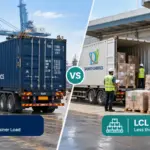
- Sea freight – LCL: 25–35 days (includes consolidation, deconsolidating, and customs clearance time) · From $30–$60/CBM
- Sea freight – FCL: 20–25 days · From ~$1,450+ per 20ft container & $2200+ per 40ft container
Rates and transit times vary by season — figures above are indicative.
For businesses that prefer a single fixed cost with no surprises in UAE, Dashgo offers a complete DDP door-to-door service from China to Dubai — covering freight, customs clearance, customs duty and VAT, and final delivery anywhere in the UAE.
When Air Freight Makes Sense
Businesses generally choose door to door air freight from China when speed is the highest priority.
It is commonly used for:
- High-value products
- Urgent commercial shipments
- Electronics
- Medical equipment and healthcare supplies
- Product samples
- Seasonal or promotional inventory
Although air freight costs more than sea freight, shorter transit times often help businesses avoid stock shortages and respond quickly to customer demand. For products where timing directly affects sales, the additional transportation cost can often be justified.
When Sea Freight Is the Better Option
For larger shipments, door to door sea freight from China remains one of the most cost-effective transportation methods.
Businesses usually choose between:
- Full Container Load (FCL) for larger cargo volumes
- Less than Container Load (LCL) for smaller shipments
LCL has become a practical solution for SMEs because businesses only pay for the container space they actually use. This makes importing more affordable while reducing the need to wait until enough products are available to fill an entire container.
Selecting the right shipping method depends on balancing cost, delivery schedules, and business priorities. An experienced freight forwarding partner can help identify the option that best matches each shipment.
Cargo Consolidation Helps Businesses Import More Efficiently
Many importers work with several suppliers rather than relying on a single manufacturer.
For example, a retailer may purchase lighting from one supplier, furniture from another, and decorative accessories from a third. Shipping each order separately can increase freight costs, create additional paperwork, and make inventory planning more difficult.
Cargo consolidation offers a practical alternative.
Instead of shipping every order individually, products from different suppliers are collected at a central warehouse, inspected, combined into a single shipment, and transported together.
Besides lowering shipping costs, consolidation simplifies documentation and makes inventory management easier. Businesses also gain better control over shipment schedules because multiple purchases can move together instead of arriving at different times.
For companies that import regularly, cargo consolidation is often one of the simplest ways to improve efficiency while keeping logistics costs under control.
Customs Clearance: Good Preparation Saves Time Later
For many importers, customs clearance is the stage that causes the most concern. While shipping schedules often receive the most attention, delays are just as likely to happen because of missing paperwork or incorrect declarations.
Every shipment entering the UAE must be supported by accurate documentation. Commercial invoices, packing lists, certificates of origin, and transport documents all need to match the goods being imported. If product descriptions are inaccurate or HS codes are incorrectly declared, customs authorities may request additional verification before releasing the shipment.
This is one of the reasons businesses choose an experienced freight forwarding company rather than handling the process alone. Instead of waiting until cargo reaches the UAE, documentation can be checked and prepared before the shipment leaves China. Addressing potential issues early helps reduce unnecessary delays and keeps goods moving through customs more efficiently.
For companies that import regularly, this level of planning creates a more predictable supply chain and reduces the risk of unexpected disruptions.
DDP Shipping China to UAE: DDP vs DAP Explained
Businesses importing from China will often come across shipping terms such as Delivered Duty Paid (DDP) and Delivered at Place (DAP). While both are widely used in international trade, they place different responsibilities on the importer.
With DDP, the logistics provider takes care of transportation, customs procedures, duties, and taxes before delivering the shipment to its destination. This option is popular with businesses that want a clearer understanding of their total shipping costs and prefer to minimise administrative work.
DAP, on the other hand, covers transportation to the agreed destination, but customs duties, VAT, and import clearance remain the responsibility of the buyer once the shipment reaches the UAE.
There isn’t a single option that suits every business. Companies importing large volumes with established import teams may have different requirements from SMEs or first-time importers. Discussing shipment requirements with an experienced logistics provider makes it easier to choose the approach that best fits both operational needs and budget.
Small Mistakes Can Lead to Bigger Delays
International shipping involves many moving parts, so even a minor oversight can affect delivery timelines.
Some of the most common issues businesses encounter include:
- Missing or incomplete shipping documents
- Incorrect HS code classification
- Poor coordination between multiple suppliers
- Choosing air freight when sea freight is more suitable, or vice versa
- Booking shipments too late during peak shipping seasons
- Limited visibility once cargo is in transit
These challenges rarely occur because goods are travelling from China to the UAE. More often, they arise when different stages of the shipment are managed independently without proper coordination.
Choosing a reliable China to Dubai cargo door-to-door provider helps bring every stage of the shipment under one organised process. From supplier collection to customs clearance and final delivery, better coordination reduces the likelihood of avoidable delays and gives businesses greater confidence in their supply chain.
GCC Distribution: The UAE’s Role in GCC Distribution and Last Mile Delivery
Any shipments arriving in the UAE don’t stop there.
Dubai has developed into one of the region’s most important logistics hubs, connecting businesses with markets across the Middle East. The UAE’s port network includes Jebel Ali in Dubai, Khalifa Port in Abu Dhabi, and Sharjah’s ports — Port Khalid, Hamriyah Port, and Port Khorfakkan — managed by the Sharjah Ports Authority. International air cargo moves through Dubai International Airport, Al Maktoum International Airport, Abu Dhabi International Airport, and Sharjah International Airport, while road freight connects onward to Oman via the Hatta border and to Saudi Arabia via the Al Ghuwaifat border crossing. Free zones such as Jebel Ali Free Zone (JAFZA), Hamriyah Free Zone, and KEZAD in Abu Dhabi further support this as an efficient base for regional distribution.
After completing China to UAE shipping, businesses often store inventory in UAE warehouses before supplying customers across Saudi Arabia, Oman, Kuwait, Bahrain, and Qatar.
This approach offers greater flexibility. Instead of shipping directly from China every time an order is placed, businesses can keep stock closer to their customers, shorten delivery times, and respond more quickly to changing market demand.
For distributors, wholesalers, retailers, and growing eCommerce brands, this regional advantage — combined with fast last-mile delivery across the GCC — is one of the key reasons the UAE continues to play such an important role in international trade.
Technology Is Changing the Way Businesses Manage Shipments
International logistics has evolved well beyond simply transporting cargo between two locations. Today, businesses expect greater visibility throughout the shipping journey.
Modern logistics providers increasingly rely on digital systems that allow customers to monitor shipments, access documentation, and stay informed as cargo moves through different stages of the supply chain.
Common features now include:
- Real-time shipment tracking
- Warehouse Management Systems (WMS)
- Digital documentation
- Inventory monitoring
- Automated shipment updates
Having access to this information helps businesses plan inventory more effectively, prepare for incoming stock, and make informed purchasing decisions.
Technology doesn’t replace logistics expertise, but it gives businesses better control and transparency throughout the import process.
Amazon Fulfilment Services in the UAE: FBA Prep, FBM & Fulfilment Centers

- FBA prep: labelling, poly-bagging, bundling, and inspection before inventory reaches an Amazon fulfilment centre
- FBM support: for sellers who fulfil orders themselves rather than through Amazon, covering warehousing, pick & pack, and last-mile delivery
- Fulfilment center Dubai: how consolidated China shipments feed directly into a local fulfilment center for Amazon.ae, Noon, or Shopify orders
- Inventory management: stock visibility and replenishment triggers synced with seller dashboards
The continued growth of online retail has increased demand for dependable international logistics.
Many businesses selling through Shopify, Amazon UAE, Noon, and their own online stores rely on suppliers in China for inventory. As sales volumes grow, managing imports efficiently becomes just as important as managing customer orders.
A dependable door-to-door cargo service simplifies this process by handling supplier collection, international transportation, customs clearance, and delivery through one coordinated solution.
Businesses using Amazon fulfilment services can also benefit from organised inventory movement to fulfilment centres, helping maintain stock availability while reducing the administrative effort involved in international shipping.
For growing eCommerce businesses, a well-managed logistics process supports smoother operations and allows greater focus on sales, customer service, and expansion.
3PL Warehousing & Pick and Pack in Dubai
Getting your products from China to the UAE is only one part of the supply chain. Once the shipment arrives, businesses still need a reliable way to store inventory, process orders, and dispatch products efficiently. For companies handling online orders or supplying multiple retail locations, this stage is just as important as the shipping process itself.
This is where 3PL warehousing becomes a practical solution. Instead of investing in warehouse space, hiring additional staff, and managing fulfilment internally, businesses can store their inventory with a trusted logistics provider such as DashGo Logistics in Dubai.
A typical 3PL solution includes secure short- and long-term storage, pick and pack services for accurate order preparation, real-time inventory management, returns handling, and order fulfilment for eCommerce stores, marketplaces, and wholesale customers.
When combined with door-to-door cargo from China to UAE, this creates a seamless logistics process. Goods can move directly from the port into a professionally managed warehouse, where orders are picked, packed, and prepared for dispatch as they are received. This approach reduces operational complexity, improves inventory control, and allows businesses to scale more efficiently without the cost of maintaining their own warehouse or fulfilment team.
Selecting the Right Freight Forwarding Partner
Shipping costs are important, but they shouldn’t be the only factor when choosing a logistics company.
A capable logistics partner should have the experience and infrastructure to manage shipments efficiently while providing clear communication throughout the process.
Before making a decision, businesses should consider whether the provider offers:
- Experience handling China to UAE shipping
- Air and sea freight options
- Cargo consolidation services
- Customs clearance expertise
- Shipment tracking capabilities
- Warehousing and distribution support
- Transparent pricing
- Reliable customer assistance
A logistics provider should contribute to a stronger supply chain, not simply arrange transportation. Choosing the right partner can improve operational efficiency, reduce unnecessary risks, and support future business growth.
Final Thoughts
Importing products from China involves far more than moving cargo from one country to another. Every shipment passes through multiple stages, including supplier collection, documentation, freight transportation, customs clearance, and final delivery. When these activities are managed efficiently, businesses experience fewer disruptions and gain greater confidence in their supply chain.
This is why china to dubai cargo door-to-door services have become a preferred solution for many UAE businesses. Bringing the entire shipping process under one experienced logistics provider simplifies coordination, improves shipment visibility, and reduces the operational challenges that often come with international trade.
As trade between China and the UAE continues to expand, businesses that invest in organised logistics and dependable freight forwarding services will be better positioned to manage inventory efficiently, meet customer expectations, and support long-term growth.
Frequently Asked Questions (FAQ)
Shipping time depends on the transport method. Air freight generally takes 3–7 days, while sea freight can take 20–35 days, depending on the port of origin, customs clearance, and final delivery location. With door-to-door cargo from China to UAE, the freight forwarder manages the entire process, making delivery more streamlined and predictable.
DDP (Delivered Duty Paid) is an international shipping method where the seller or logistics provider manages transportation, customs clearance, import duties, taxes, and final delivery. This simplifies the import process for businesses by reducing paperwork and ensuring goods arrive ready for delivery.
Yes. Many freight forwarders provide Amazon FBA prep services, including product inspection, labelling, packaging, palletising, and shipping to Amazon fulfilment centres. This helps sellers meet Amazon’s requirements while reducing the time and effort involved in preparing inventory.
With Amazon FBA (Fulfilment by Amazon), Amazon stores, packs, ships, and handles customer service for your products. With Amazon FBM (Fulfilment by Merchant), the seller manages storage, packing, shipping, and customer support either in-house or through a third-party logistics (3PL) provider. The right option depends on your business model, order volume, and fulfilment requirements.
Ready to Simplify Your Imports from China to the UAE?
Whether you’re importing products for retail, eCommerce, wholesale, or Amazon FBA, DashGo Logistics provides reliable door-to-door cargo from China to UAE with complete logistics support. From freight forwarding and customs clearance to secure warehousing, pick and pack, and last-mile delivery, our end-to-end solutions help streamline your supply chain and keep your business moving efficiently.
Businesses looking for dependable cargo services in Dubai, China to UAE cargo solutions, or integrated 3PL warehousing and fulfilment can rely on DashGo’s scalable logistics network to support long-term business growth.
Get a free quote today or contact our team via WhatsApp for immediate assistance.
Most quotations are provided within 60 minutes during business hours.